

For most people, the best all-purpose yoga mat thickness is about 4 to 5 mm, roughly 1/8 inch, which balances joint comfort with the ground feedback you need for balance poses. The exceptions: go thinner for travel, thicker if you have sensitive knees or wrists or practice mostly restorative yoga, and always weigh material density alongside the number on the label. The chart and checklist below help you fine-tune from there.
TL;DR:
- A 4 to 5 mm mat provides an optimal balance of stability and cushioning for most yoga styles and beginner practice.
- Thicker mats over 6 mm are better for restorative, Yin, or joint-sensitive practices but can reduce stability during standing poses.
- Material density and flooring type significantly affect support, with high-density rubber outperforming low-density foam regardless of thickness.
- Travel-specific mats around 1.5 to 2 mm are lightweight and foldable, but may lack support for standing poses and should be paired with additional padding if needed.
- Testing a mat by pressing your thumb into it or attempting balance poses in-store can help determine if its compression and support meet your needs.
Table of Contents
- Quick Thickness Chart: What Millimeter Range Fits Your Practice
- How Thickness Changes Balance and Cushioning
- Match Thickness to Your Yoga Style and Body
- Travel and Portability Without Sacrificing Comfort
- Why Two Mats With the Same Thickness Can Feel Completely Different
- Decision Checklist: Three Steps to Choose Your Thickness Today
- What Couch & Dumbbells Recommends for Home Practice
- An Honest Take on Thickness Advice
- Shop Mats and Gear Built for Real Home Floors
- Sources
- FAQ
Quick Thickness Chart: What Millimeter Range Fits Your Practice
Yoga mats sold today span a wide range, from ultra-thin travel rolls to therapeutic mats much thicker than standard mats, according to YogaLith’s buyer’s guide. Most people never need either extreme. Here’s how the middle ground breaks down by what you’ll actually use it for.
| Thickness | Best Use Case | Why It Works |
|---|---|---|
| 1.5 to 2 mm | Travel, hotel rooms, studio drop-ins | Folds flat, weighs almost nothing, meant to layer over a towel |
| 3 to 4 mm | Vinyasa, power flow, hot yoga | Keeps you close to the floor for stable transitions and balance |
| 4 to 5 mm | All-purpose, beginners, mixed styles | The most common studio and home standard |
| 6 to 8 mm | Restorative, Yin, joint-sensitive knees | Extra cushioning for kneeling and seated holds |
| 8 to 10 mm | Therapeutic, seniors, very hard floors | Maximum give, though stability drops on standing poses |
The 1/8 inch mark, about 3 to 4 mm, keeps showing up across REI’s own buying guide because it hits a sweet spot studios have relied on for years:
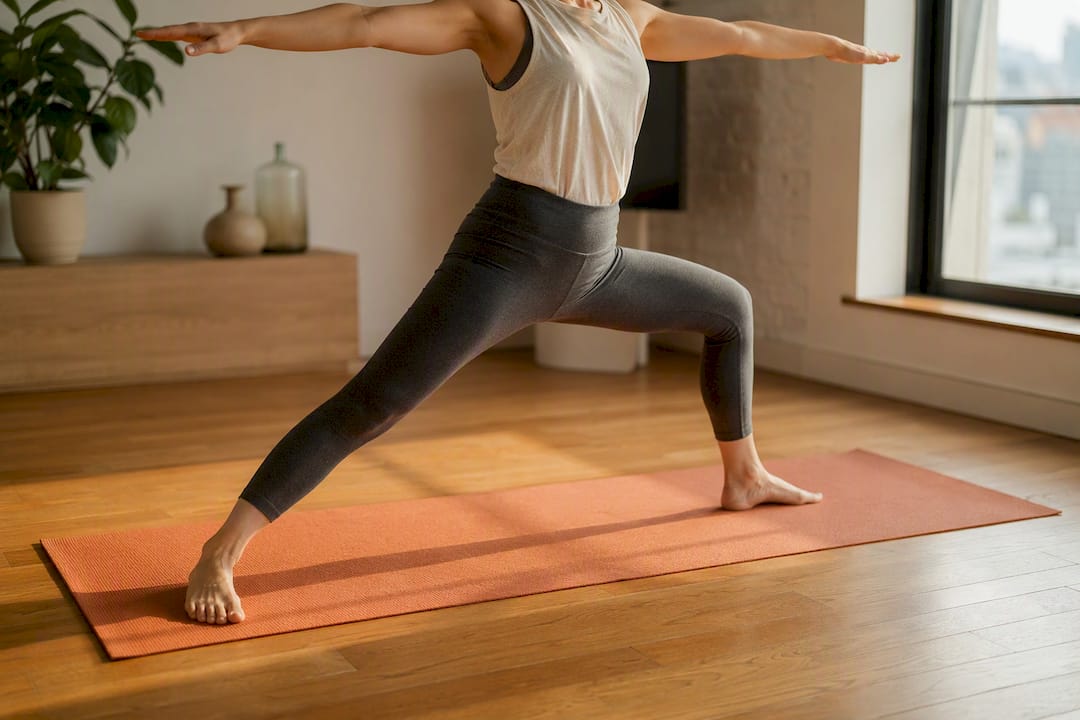
- It’s thin enough that you can feel the floor under your feet during Warrior poses.
- It’s thick enough to spare your palms and knees on hardwood or tile.
- It rolls into a size that fits most standard yoga mat storage bags without bulging.
How Thickness Changes Balance and Cushioning
A thicker mat isn’t automatically a more comfortable one. Foam compresses under pressure, and if it compresses too much, your foot or hand sinks into the surface instead of pressing against something solid. Yoga instructors call this “bottoming out,” and it quietly undermines proprioception, your body’s sense of where it is in space, which matters enormously in balance poses like Tree or Half Moon.
Compare a dense 4 mm mat to a soft 6 mm foam mat. The 4 mm mat gives your standing leg a stable platform, so tiny muscle adjustments in your ankle translate into real balance corrections. The 6 mm mat, if it’s low-density, absorbs those same adjustments into mush, and you end up wobbling more, not less.
A few things shift how much this matters for you:
- Body weight: heavier practitioners compress foam faster, so a mat that feels supportive for one person may bottom out for another.
- Floor hardness: concrete or tile punishes a thin mat more than a carpeted or sprung studio floor, per the flooring context in Couch & Dumbbells’s home gym flooring guide.
- Practice style: standing balance sequences reward firmness; kneeling or seated holds reward give.
Match Thickness to Your Yoga Style and Body
The right thickness depends less on personal preference and more on what your joints are doing against the mat during a typical session. Here’s how to think through it by style and by body need.
- Vinyasa or power flow: stick with 3 to 5 mm. You’re jumping between standing poses and transitions, and a firmer mat helps you stick landings without sinking.
- Hatha or general practice: 4 to 5 mm covers nearly every pose you’ll hit in a mixed class, which is why it’s the default recommendation from Kit Authority’s mat guide.
- Yin or restorative: go to 6 to 8 mm. Long, held poses put sustained pressure on knees, hips, and shoulders, and the extra foam matters when you’re not moving to redistribute weight.
- Hot yoga: stay at 3 to 4 mm and prioritize grip over cushioning, since sweat changes how your hands and feet interact with the surface far more than thickness does.
- Heavier practitioners or sensitive joints: lean toward the denser end of 5 to 6 mm rather than jumping straight to the thickest option, and add a folded blanket under knees for targeted spot cushioning instead of replacing the whole mat.
Props solve a lot of problems a thicker mat can’t. A blanket under one knee in Pigeon pose does more for that specific joint than an extra 2 mm across the entire surface.
Travel and Portability Without Sacrificing Comfort
Air travel and yoga mat thickness rarely mix well. A full 5 mm mat is heavy, bulky, and awkward to strap to a carry-on, which is why travel-specific mats top out around 1.5 to 2 mm and fold rather than roll.
- Look for foldable mats designed to layer over a hotel room rug or a folded towel, which restores some of the cushioning you’d lose from going thin.
- Weight matters more than most people expect at airport security lines, so a foldable design under a couple of pounds beats a rolled standard mat every time.
- A small knee pad packs flatter than a full mat and solves the one spot, your knees, that actually needs padding during travel practice, a tip echoed in REI’s yoga gear guidance.
- If you’re building a minimalist travel kit, a portable fitness equipment set can round out what a thin mat leaves behind.
Why Two Mats With the Same Thickness Can Feel Completely Different
Millimeters only tell part of the story. Material and density decide whether that number translates into real support or just marketing.
- Natural rubber: dense, grippy, and tends to hold its shape longer than foam alternatives, though it’s heavier to transport.
- PVC: budget-friendly and durable, but lower-density versions can feel spongy even at a generous thickness.
- TPE: lighter and often more eco-conscious than PVC, with grip that varies widely by brand.
- Closed-cell foam: common in thicker restorative mats, comfortable for stillness but prone to bottoming out during active poses.
Hugger Mugger’s guide makes the point plainly: a high-density 4 mm rubber mat can outperform a low-density 6 mm foam mat for actual support. Grip also fades faster on cheap surfaces once sweat gets involved, which is where grip-focused yoga socks can help bridge a slick mat surface during hot or sweaty sessions.
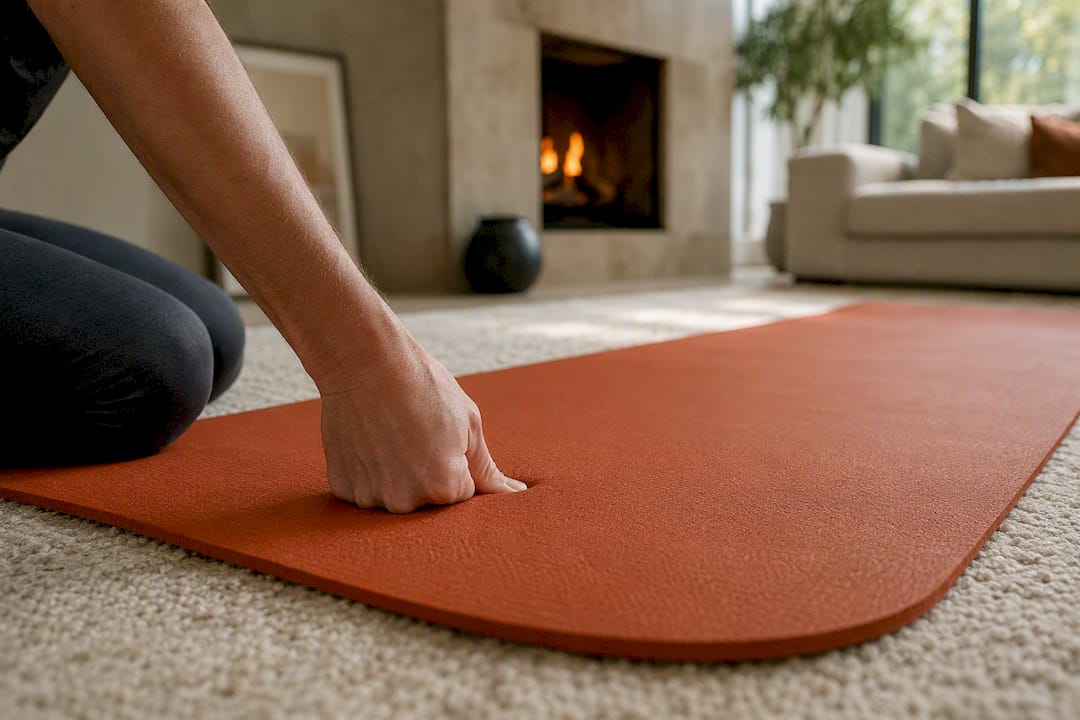
Pro Tip: Before buying based on thickness alone, press your thumb into the mat in the store. If it takes more than a second to spring back, that’s low-density foam, and it will bottom out under your standing leg no matter what the label says.
Decision Checklist: Three Steps to Choose Your Thickness Today
Answering three questions narrows the field faster than scrolling through spec sheets.
- What’s your primary practice? Flow and balance-heavy styles point to 3 to 5 mm. Restorative, Yin, or joint pain point to 6 mm or more.
- Do you have knee or wrist sensitivity? If yes, prioritize density over sheer thickness, and consider pairing a mid-thickness mat with targeted padding rather than the thickest mat you can find.
- Will this mat travel with you? If air travel is regular, buy a dedicated 1.5 to 2 mm foldable mat instead of expecting one mat to do everything.
In a store, press the mat against a hard surface and step on it. Soft foam that squishes flat under light pressure, mats with a slick or shiny surface, and mats that feel heavier than they look without added support are all red flags worth walking away from.
Pro Tip: If you’re testing balance poses on a mat before buying, try Tree pose right there in the aisle. A mat that lets your standing foot wobble more than it would on bare floor is too soft for your needs, no matter its thickness rating.
What Couch & Dumbbells Recommends for Home Practice
Most home practitioners do best starting at 4 to 5 mm, then stepping up to a dense 6 mm option if their floor is hardwood, tile, or concrete. That single adjustment solves more comfort complaints than any other spec change. If your home gym floor is part of the problem, our guide on choosing durable flooring for a home gym walks through how surface hardness interacts with whatever mat you put on top of it.
An Honest Take on Thickness Advice
Thickness affects comfort and stability, but factors like mat density and the type of floor you practice on also significantly influence how a mat performs. A 6 mm mat on a plush carpet behaves nothing like a 6 mm mat on concrete, and the internet’s obsession with the biggest, softest mat available often steers beginners toward exactly the wrong purchase for balance work.
What the research actually supports is starting conservative. A 4 to 5 mm mat handles more real-world situations than shoppers assume, and it’s far easier to add a folded blanket for a sore knee than to compensate for a mat so thick it wobbles under every Warrior pose. Prioritize your actual floor, your actual practice style, and whether you travel, in that order, before you even look at density or brand. Thickness is the last variable to optimize, not the first.
— Brian Dunn, Couch & Dumbbells
Shop Mats and Gear Built for Real Home Floors
Couch & Dumbbells curates fitness gear the same way we curate furniture: for how it actually performs in your space, not just how it looks on a shelf. Our collection focuses on pieces that hold up on real home floors, whether that’s hardwood, tile, or a rented apartment with thin carpet over concrete.

Browse the full Fitness & Gear collection for mats, portable equipment, and accessories chosen for density and durability rather than marketing claims. If travel practice is your priority, the portable fitness equipment line is built to pack light without leaving your joints unsupported. Check current stock and start building a setup that matches your actual floor and practice today.
Sources
- How to Choose a Yoga Mat
- How to choose a yoga mat that fits your practice | Kit Authority
- Yoga Mat Thickness: The Definitive Buyer’s Guide 2026
FAQ
What Is the Best Thickness for a Yoga Mat?
For most practitioners, 4 to 5 mm (about 1/8 to 1/5 inch) offers the best balance of cushioning and ground feedback, with 6 to 8 mm better suited to restorative practice or sensitive joints.
Is a 10 mm Mat Too Thick for Yoga?
A 10 mm mat works for therapeutic or restorative use where you’re mostly kneeling or seated, but it tends to reduce stability during standing balance poses because your foot sinks too far into the foam.
What Is a Good Thickness for a Yoga Mat if I’m a Beginner?
Start at 4 to 5 mm. It’s forgiving enough for kneeling poses while still giving you the floor contact you need to build balance and confidence in standing sequences.
Is a 3 mm or 5 mm Mat Better for Yoga?
A 3 mm mat suits active, balance-heavy styles like Vinyasa or hot yoga where ground feedback matters most, while a 5 mm mat offers more cushioning for mixed practice or longer holds without sacrificing much stability.