

A yoga corner is a small, visible spot you set aside on purpose for practice and stillness, and the fastest way to start is picking a low-friction spot and leaving a mat and one prop out where you’ll see them. Skip the Pinterest perfection for now. This guide walks through quick layout ideas, what to buy first, lighting and decor that won’t clutter your space, and a setup checklist you can finish this afternoon.
TL;DR:
- A yoga corner should be in a visible, accessible space where you can extend your arms and move freely without hitting furniture or fixtures.
- Starting with a basic mat, a support block, a strap, and simple storage solutions is sufficient before upgrading to more durable gear and layered lighting.
- Natural light is ideal for morning practice, while warm, dim lighting suits evening or restorative sessions, with ventilation playing a key role in air quality.
- Stick to a calm, neutral color palette and minimal decor, favoring a single plant and textiles that support the practice without creating visual clutter.
- Consistent daily use relies on leaving out the mat and prop setup, establishing a 7-day routine, and ensuring safety through non-slip flooring and clear space.
Table of Contents
- Yoga Corner Ideas: 12 Layouts You Can Copy This Weekend
- How to Pick the Spot and Arrange Your Layout
- Essentials and Storage: What to Buy First
- Lighting and Atmosphere for Morning and Evening Practice
- Decor and Materials That Support Calm
- Budget Builds vs. Elevated Setups: Where to Spend
- Setup Checklist and a 7-Day Ritual to Make It Stick
- Ventilation and Air Quality in a Home Yoga Corner
- Safety Tips for a Home Yoga Corner
- Personalizing Your Corner for Different Yoga Styles
- A Design and Fitness Perspective on Why Corners Stick
- How Couchanddumbells Helps You Build a Corner That Lasts
- Sources
- FAQ
Yoga Corner Ideas: 12 Layouts You Can Copy This Weekend
You don’t need a spare room. You need one wall, one window, or one quiet edge of a room that you’re willing to claim. Here are twelve starting points, pulled from small-space setups that actually hold up to daily use.
- Window nook with a plant and rug anchor. Position your mat so morning light hits it directly, then define the space with a small rug underneath.
- Bedroom-edge retreat. Use a curtain or a folding screen to visually separate the corner from the rest of the room without losing square footage.
- Bookshelf or alcove integration. Tuck the corner into an existing nook, using the shelf itself for prop storage.
- Minimal mat plus wall hook. For studio apartments, one hook and a rolled mat is the entire setup.
- Mirror-backed spot. A leaning mirror lets you check alignment during standing poses without dedicating wall space to mounting hardware.
- Multi-use living room corner. Choose furniture that closes up fast, so the space reverts to a normal living room in under a minute.
- Covered porch or balcony setup. Weatherproof cushions and a shaded corner make outdoor practice usable most of the year.
- Foldable, movable corner for renters. A mat that rolls into a basket and a lightweight bolster travel with you at move-out.
- Altar-style meditation corner. A low shelf with a candle, a small bowl, or a stone gives Savasana somewhere quiet to land.
- Rug-under-mat anchor. Even without walls to define the space, a rug marks the boundary and softens the visual edge.
- Plant-lined mini sanctuary. Two or three plants along one wall create a sense of enclosure without adding furniture.
- Bench-plus-basket combo. A slim bench doubles as a seat and a shelf; a basket underneath swallows props between sessions.
How to Pick the Spot and Arrange Your Layout
Run a three-move test before committing to a corner: check visibility, clearance, and light and air. A spot you walk past daily gets used far more than one tucked behind a closed door, since a visible location beats a perfectly styled one you have to seek out. Confirm you can extend your arms overhead and step into a lunge without hitting furniture. That’s generally enough space for most home practices.
Angle your mat diagonally if the room is narrow. This buys extra length for forward folds and gives you a few inches of buffer for a block or strap along the mat’s edge instead of behind you.
Carpeted floors need a firmer base underneath the mat to stop wobbling in balance poses. A thin plywood board or a dedicated flooring layer under a standard mat solves this without a renovation. If your mat slides on hardwood, a light misting of water or a grippier mat surface usually fixes it.
Essentials and Storage: What to Buy First
You need less gear than the wellness aisle suggests. Start with the basics and add only what a specific pose actually requires.
- A standard mat sized to your height, plus a few extra inches for movement.
- One block for support in standing poses and seated stretches.
- A strap for shoulder openers and hamstring work.
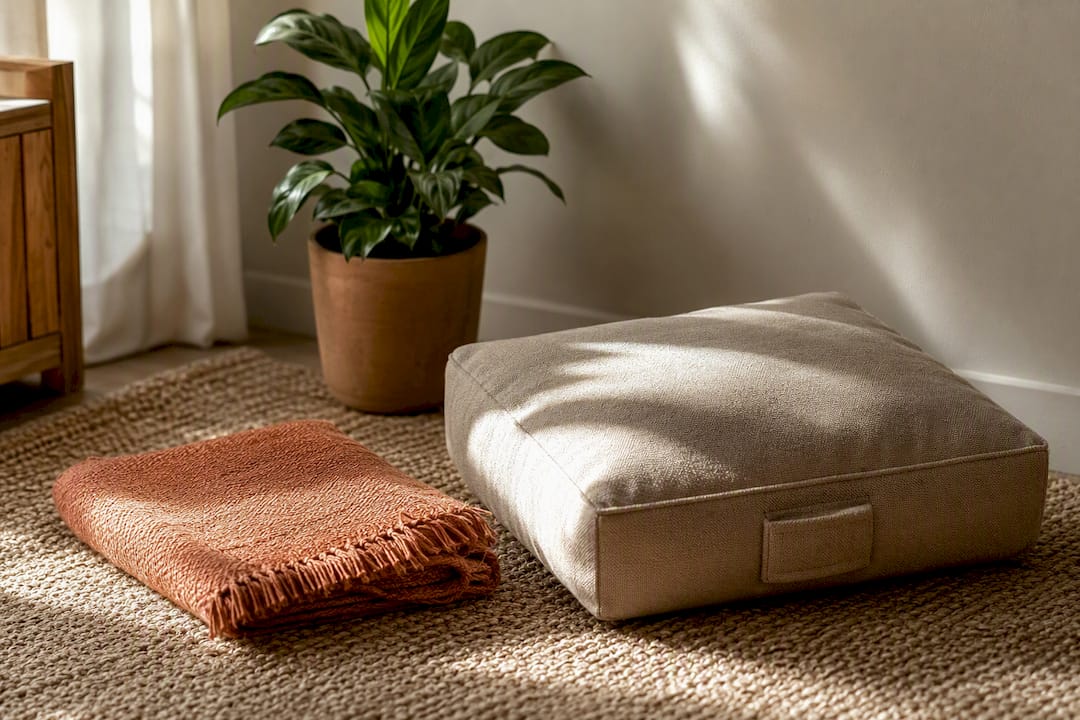
- A folded blanket or cushion, layered under knees or hips instead of relying on mat thickness alone for cushioning where it counts.
- Wall hooks, a slim shelf, or a basket to keep everything visible and grabbable.
Store gear where you’ll see it on your way to the mat, not in a closet across the room. A basket beside the mat invites use. A bin in another room becomes a place things go to disappear.
Lighting and Atmosphere for Morning and Evening Practice
Natural light works best for energizing morning flows. If your corner sits near a window, let that light do the work rather than layering on lamps. Evening or restorative practice calls for warmer, dimmer light. A dimmable lamp, a string of warm-toned lights, or a few flameless candles create enough glow for Savasana without waking up your nervous system.
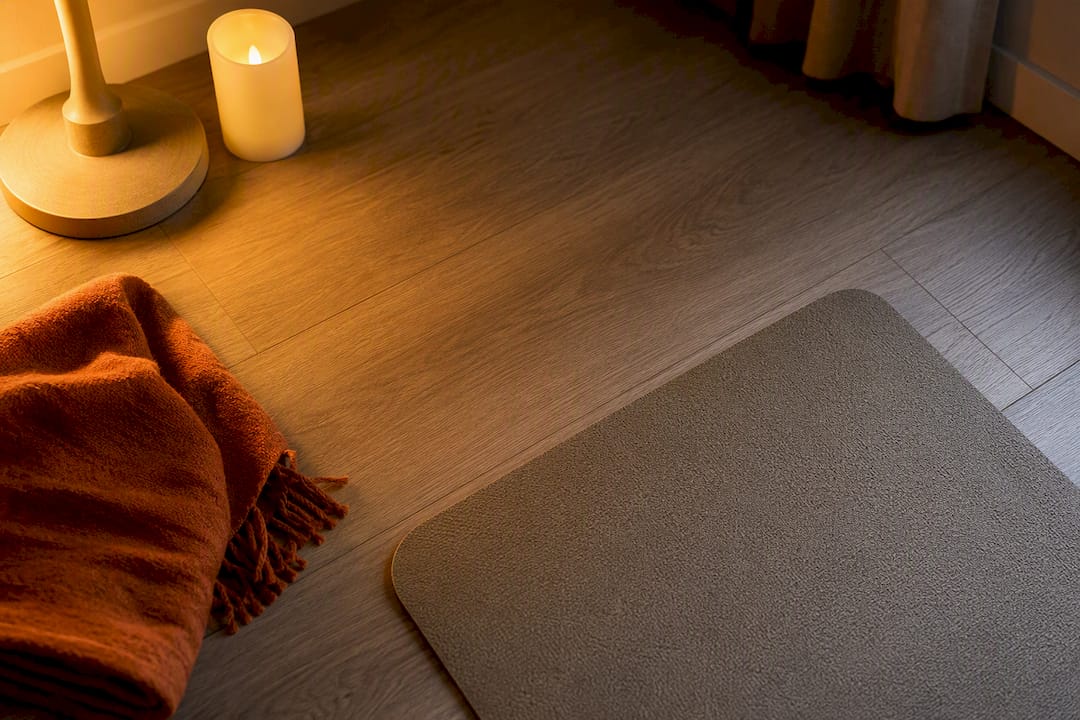
A small fan nearby keeps air moving during a sweaty flow and doubles as white noise during meditation. For sound, a small speaker set at a low volume works better placed slightly behind or beside you than directly in your sightline. A reed diffuser or a few drops of essential oil on a cloth nearby adds a scent cue that signals your brain it’s time to slow down.
Decor and Materials That Support Calm
Stick to a narrow, tactile palette. Warm neutrals, clay tones, and soft greens tend to age better visually than trend colors, and they don’t compete with your focus during practice.
Follow a one-plant rule. A single healthy plant, like a pothos or snake plant that tolerates low apartment light, does more for the space than five scattered succulents that need daily attention. Over-accessorizing adds upkeep and visual noise, which works against the calm you’re trying to build.
For textiles, a rug under the mat anchors the space visually, a cushion supports seated poses, and a folded blanket handles both warmth and cushioning. A textured throw or a hide rug adds warmth without adding clutter, as long as you resist stacking on more than two or three textiles total.
Budget Builds vs. Elevated Setups: Where to Spend
A usable yoga corner costs very little to start, and the smarter upgrades come later once you know how the space actually gets used.
Starter build (get moving this week):
- Basic mat, one block, one strap
- A folded blanket for cushioning
- A wall hook or small basket for storage
- Natural light plus one lamp for evening sessions
Upgraded build (once the habit sticks):
- A longer-life, higher-density mat that resists compression
- A slim storage bench or shelving unit that matches your living room design
- Weather-rated outdoor furniture if your corner is a porch or balcony
- Layered lighting with a dimmer and a small fan
Pro Tip: If your corner lives outdoors, check the wood finish on any platform or bench before committing to it. Untreated or poorly sealed wood absorbs heat and gets uncomfortable underfoot fast, so a sealed, lighter-toned wood or a shaded spot keeps barefoot practice comfortable through summer.
Setup Checklist and a 7-Day Ritual to Make It Stick
Getting the corner built is the easy part. Getting yourself back to it daily is the actual goal.
- Clear the floor space and confirm your clearance test from earlier.
- Roll out the mat and leave it visible, unrolled, not tucked in a bag.
- Set your lighting (natural by day, warm lamp by evening).
- Add one visual marker, a plant or a small object, so the eye knows this spot is intentional.
- Put props in a basket within arm’s reach, not in another room.
For the next seven days, commit to five to ten minutes daily in the corner, no matter how short. A mat left out is a visual cue your brain registers every time you pass it, and that repetition builds the habit faster than a longer session done once a week. If you notice mail, laundry, or random items landing on the mat, that’s your signal to move the basket closer and the junk drawer farther away.
Ventilation and Air Quality in a Home Yoga Corner
Airflow matters more than most people plan for, especially in a corner tucked into a bedroom or a converted closet space. Stale air makes deep breathing exercises feel harder than they should, and a stuffy room undercuts the calming effect you’re going for in restorative or meditation-focused practice.
If your corner has a window, use it. Cracking a window for five minutes before or after practice resets the air without a lasting draft. In rooms without direct airflow, a small oscillating fan set on low keeps air circulating without blasting cold air across your mat. Position it to move air across the room rather than directly at your body during stillness poses, where a strong draft becomes distracting rather than refreshing.
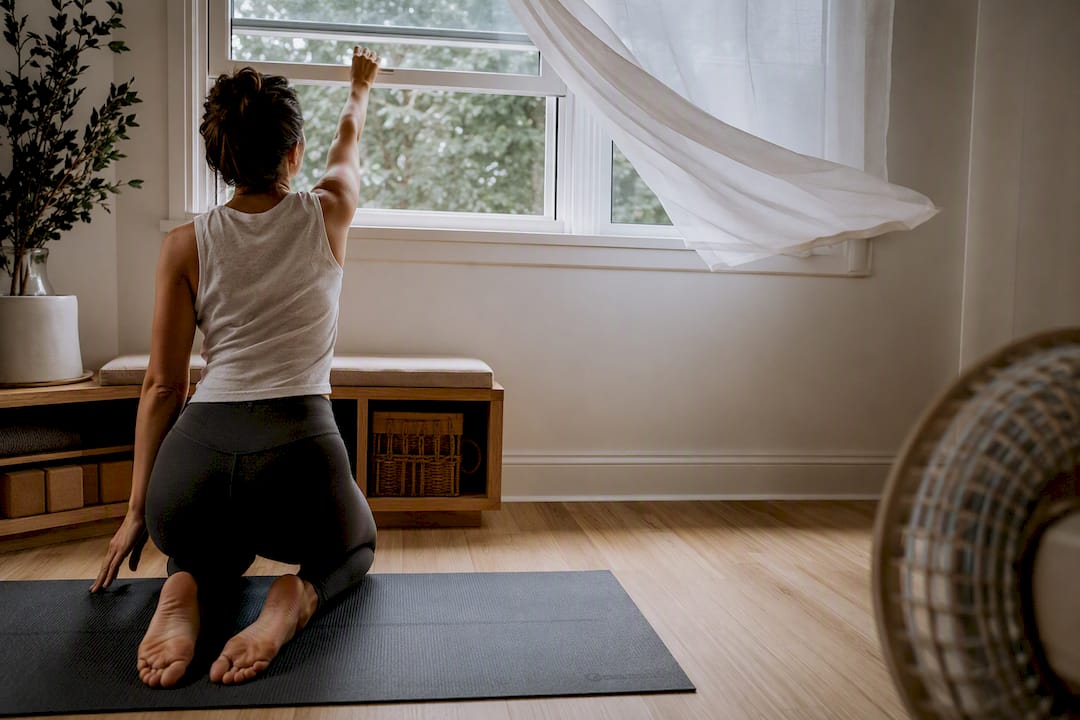
Humidity plays a role too. A sweaty flow practice in a small, closed room raises moisture in the air fast, which can make mats feel slippery and encourage mildew if the space stays damp for long stretches. A small dehumidifier or simply airing the room out after a hot session keeps both your gear and your walls in better shape. If your corner sits near a kitchen or bathroom, keep an eye on shared ventilation and avoid stacking humidity sources in one small zone.
Houseplants help marginally with air quality, but don’t rely on greenery alone to fix a stuffy room. Think of plants as a decor choice with a small bonus, not a ventilation system.
Safety Tips for a Home Yoga Corner
A home practice space should feel calming, not risky, and most safety issues come down to a handful of avoidable setups.
Check your floor surface first. A mat on a slippery hardwood floor without grip can slide during standing poses, and a mat bunched up on thick carpet can roll under your foot mid-pose. A solid, flat, non-slip surface underneath the mat solves both problems.
Give yourself real clearance. Coffee tables, floor lamps, and low shelving are the most common culprits behind stubbed toes and knocked-over candles during a flow. If you’re using candles or a diffuser near the mat, keep them off to the side, never directly in the path of movement, and never on the floor where an arm balance could tip them over.
Watch cords and cables. A phone charger or a floor lamp cord crossing your mat space is an easy trip hazard, especially during eyes-closed meditation or Savasana when you’re not scanning the floor.
If your corner is outdoors, check the surface for stability before committing to a covered porch or balcony practice. Uneven decking boards or a rug that shifts on a breezy day both create fall risk that a quick inspection can catch early. And if you’re practicing near a railing or edge, keep your mat a few feet back regardless of how much space you think you have.
Personalizing Your Corner for Different Yoga Styles
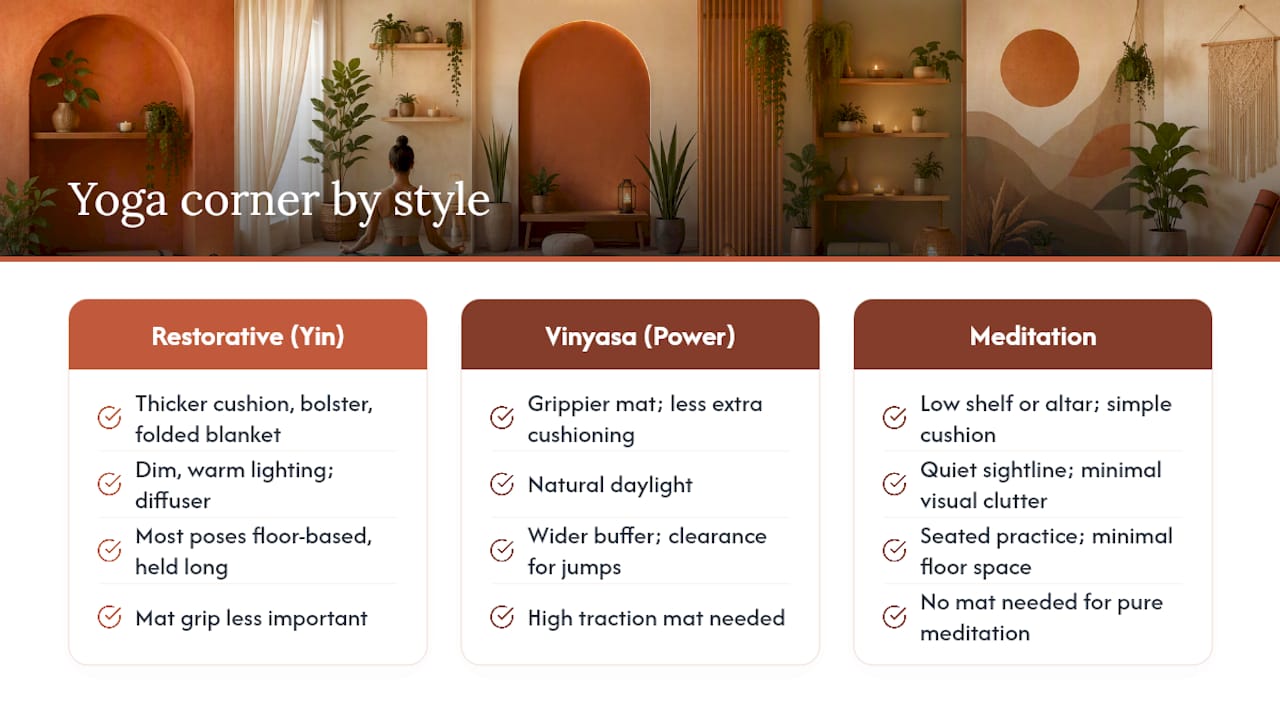
The layout that works for a slow, restorative practice looks different from one built for a sweaty vinyasa flow, and your corner can flex between them with a few small swaps.
For restorative or yin practice, prioritize softness. A thicker cushion, a bolster, and a folded blanket matter more than mat grip, since most poses are floor-based and held for minutes at a time. Dim, warm lighting and a diffuser fit this style better than bright overhead light.
For vinyasa or power flows, prioritize traction and clearance. You’ll move fast and land in lunges and jumps, so a grippier mat and a wider buffer zone matter more than cushioning. Natural daylight suits this style, since it tends to happen earlier in the day and benefits from energizing light.
For meditation-focused practice, the altar-style corner idea from earlier works well. A low shelf, a cushion, and minimal visual clutter support stillness better than a full prop setup. You won’t need a mat at all for pure seated meditation, just a comfortable cushion and a quiet sightline.
If you rotate between styles during the week, keep a small basket with options for each: a bolster for yin days, a grippier mat topper for flow days, and a simple cushion for meditation mornings. Swapping props takes seconds once they’re all within reach, which keeps the corner flexible instead of locked into one single use.
A Design and Fitness Perspective on Why Corners Stick
The corners that last aren’t the most photogenic ones. They’re the ones where a good mat sits next to a shelf that actually holds your gear, so nothing stands between you and five quiet minutes. Couchanddumbells sees this constantly: readers who pair one durable prop with one smart storage piece stick with practice far longer than those chasing a fully styled room.
— Brian Dunn, Couch & Dumbbells
How Couchanddumbells Helps You Build a Corner That Lasts
Once you’ve picked your spot, the gap between “good idea” and “actually used daily” usually comes down to having the right pieces on hand instead of scattered across three different stores. Couchanddumbells carries the storage baskets, slim shelving, cushions, mats, and outdoor furniture that turn the ideas above into a corner you’ll walk to on purpose.
If you’re outfitting a small apartment nook, a rug anchor and a wall-mounted shelf solve most of the clutter problem in one trip. If your corner lives on a porch or balcony, weather-safe seating and a durable outdoor set hold up better than anything meant for indoor use. Readers who care about both how the space looks and how long the gear lasts tend to get the most out of shopping in one place rather than piecing together mismatched storage and props. Browse the Home & Interior collection to find the storage and styling pieces that match your layout, then round out your setup with a mat or block from the practice gear selection.
Sources
- 10 Creative Ways to Make the Outdoors Your Yoga Studio
- Yoga
- 15 Small Space Yoga Corner Ideas That’ll Turn Your Tiny Apartment Into a Zen Den - Cupful of Cozy
FAQ
What are some creative yoga corner ideas for small spaces?
Try a window nook with a rug anchor, a bookshelf-integrated corner, a foldable setup for renters, or an altar-style meditation spot with a low shelf and candle.
What color is best for a yoga room?
Warm neutrals, soft clay tones, and muted greens tend to support calm better than bright or saturated colors, and they age well over time without needing frequent updates.
How do you create a meditation corner at home?
Pick a quiet, visible spot, add a low shelf or small table with a candle or object of focus, and keep the area free of clutter so your eyes have somewhere calm to rest.
What should you put in a yoga room?
Start with a mat, one block, a strap, and a folded blanket, then add a rug for anchoring, a hook or basket for storage, and one plant rather than a collection of decor.