
The best-fitting joggers sit secure at the waist, stay relaxed through the thigh, and taper gradually down to a cuff that lands right at or just above your shoe. Get those three areas right and everything else, comfort, mobility, and style, tends to follow. On sizing, trust your true waist measurement over guesswork, and only size up if that waist still fits comfortably in the next size.
TL;DR:
- Prioritize waist measurement and choose a size that feels comfortable when sitting and moving, especially at the waistband and thigh area.
- The cuff should land at or just above your shoe to avoid bunching or riding up, with length measured on your actual footwear.
- For better fit, consider body shape and height—petite frames benefit from shorter inseams, while curvier or athletic builds need relaxed cuts and higher rises.
- Fabrics with higher elastane percentages allow for smaller sizes without compromising movement or stretch.
- Avoid sizing up solely for more leg room; instead, opt for relaxed cuts that maintain waist security and proper rise.
Table of Contents
- Joggers Fit Guide: The Six Checkpoints That Matter Most
- How Do You Measure for the Right Jogger Size?
- Adjusting Fit for Your Height and Body Shape
- Does Fabric Change How Joggers Should Fit?
- When Should You Size Up, Size Down, or Change the Cut?
- Common Fit Mistakes and Your Quick In Store Checklist
- Why Fit-First Design Actually Matters
- Which Couch & Dumbbells Joggers Match Your Fit Needs
- Sources
- FAQ
Joggers Fit Guide: The Six Checkpoints That Matter Most
You can tell whether joggers fit in about ten seconds if you know where to look. There are five main fit areas that determine whether a pair works for you, and a sixth, length, that ties everything together.
- Waist: it should sit at your natural waistline without gapping or digging in when you sit down.
- Rise: the distance from waistband to crotch seam; a higher rise covers more of your torso and suits curvier hips, while a lower rise feels more athletic.
- Thigh: you want enough room to lift your knee to hip height without the fabric pulling tight across your leg.
- Taper: the gradual narrowing from thigh to ankle; too aggressive and it restricts movement, too loose and it looks sloppy.
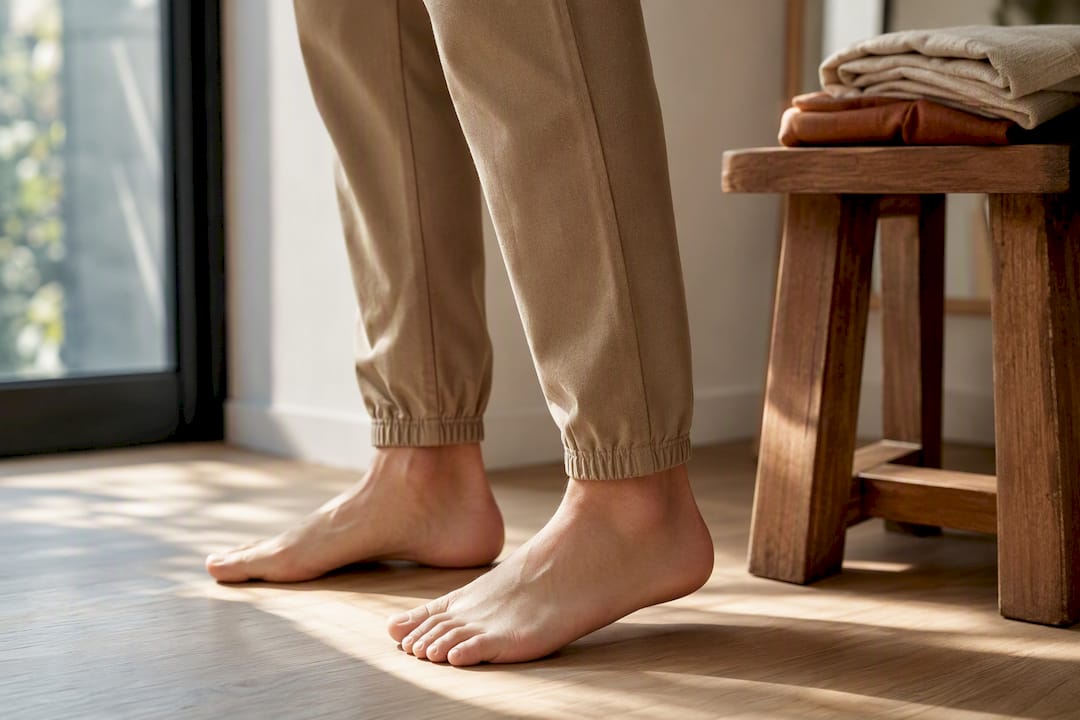
- Cuff: should land at or just above the top of your shoe, not bunching on the ground or riding up your shin.
- Length/inseam: measured with the shoes you’ll actually wear, since footwear changes how much fabric stacks at the ankle.
Pro Tip: Try three quick tests before you buy: sit down and check the waistband doesn’t dig in, lift one knee toward your chest and feel for pull across the thigh, and pinch the fabric at mid-thigh, if you can grab more than an inch of slack, the fit is too loose for a tailored look.
One useful pattern to remember: most fit complaints trace back to just one problem area, usually the waist or rise. Fix that single spot and the rest of the pair often falls into place.
How Do You Measure for the Right Jogger Size?
Getting your numbers right takes five minutes and saves you a return shipment. Here’s the order that actually matters:
- Measure your waist with a soft tape at your natural waistline, where you’d wear a belt, not where your jeans currently sit.
- Measure your hips and seat at the widest point, this matters more than waist if you’re choosing a roomier or curve-friendly cut.
- Measure your inseam from crotch to ankle bone while standing, using pants that already fit well as a reference.
- Compare against the brand’s own size chart, since measurements vary significantly between brands even at the same labeled size.
Prioritize waist measurements for a tailored fit and hip or thigh numbers if you want more room to move. If you land between two sizes, check the fabric’s stretch content first, a blend with meaningful elastane often lets you size down without losing mobility, which we cover more in the fabric section below. For a related measuring approach, our sports bra sizing guide walks through similar movement tests you can apply here too.
Adjusting Fit for Your Height and Body Shape
Joggers aren’t one-size-fits-all, and pretending otherwise is how most fit disappointments happen. Height changes which inseam length works: petite frames often do better in a 7/8 length that avoids excess pooling at the ankle, average heights usually fit standard inseams without alteration, and taller frames should look specifically for long-inseam options rather than just sizing up overall, which throws off the waist.
Body shape matters just as much as height:
- Hourglass or curvy hips: look for a higher rise that covers your midsection comfortably and prevents gapping at the back waistband when you sit.
- Athletic or muscular legs: prioritize a relaxed thigh cut over a slim one, since a too-narrow leg will restrict movement during squats or lunges.
- Pear-shaped bodies: a slight taper below the knee balances proportions without squeezing the thigh area you actually need room in.
- Plus-size frames: look for a cut designed with built-in room rather than simply buying up two sizes, which we’ll explain further in the sizing section.
When you try on a pair, sit down, stand up, and take a few steps before deciding. A jogger that looks great on the hanger but pulls tight when you bend your knees isn’t the right cut for your body, regardless of size number.
Does Fabric Change How Joggers Should Fit?
Fabric choice changes almost everything about how a jogger behaves once you’re actually moving in it. Cotton-rich blends feel soft against skin but tend to lose their shape after repeated washes, meaning a snug fit at purchase can turn baggy within a few months. Fleece adds warmth and structure but usually runs heavier and less forgiving through the thigh. Synthetic performance blends, typically polyester with added elastane, hold their shape wash after wash and stretch with your movement instead of against it.
- Cotton or cotton blends: best for lounging or casual wear where structure matters less than softness.
- Fleece: suited to cooler weather and low-intensity movement, not high-mobility training.
- Polyester/elastane blends: the strongest choice for strength training, running, or travel, since they move with your body and dry faster.
Elastane percentage is the number worth checking before you buy. Higher elastane content lets you comfortably size down without sacrificing the range of motion you need for squats, lunges, or long travel days. Our squat-proof leggings breakdown covers similar fabric performance testing if you want to go deeper on stretch behavior.
When Should You Size Up, Size Down, or Change the Cut?
Sizing decisions get simpler once you separate “I need more leg room” from “I need a bigger waist.” They’re rarely the same problem.
- Size up only if your true waist measurement still fits in the next size up, never just to chase extra leg volume.
- Size down when the fabric has meaningful stretch (high elastane content) and you want a slimmer, more tapered silhouette.
- Change the cut instead of sizing up if you need more room through the thigh, a relaxed or roomy cut preserves waist security and rise that a larger size often throws off.
Buying up for volume is the single most common mistake shoppers make, and it usually backfires at the waistband, not the thigh.
Common Fit Mistakes and Your Quick In Store Checklist
Even careful shoppers repeat the same handful of errors. The biggest one, as covered above, is sizing up for leg room and accepting a loose waist and rise as the tradeoff. A close second is skipping the sit-down test and judging fit only while standing still.
Run through this six-point check before you commit to a pair:
- Sit down and confirm the waistband doesn’t dig in or gap open.
- Take a few steps to feel whether the thigh area restricts your stride.
- Do a shallow lunge to test rise coverage and thigh flexibility together.
- Lift one knee toward your chest to check for pulling fabric.
- Test the front pockets with your phone or keys inside to see if they sag or hold shape.
- Press two fingers into the waistband to confirm it’s snug but not compressing.
| Fit Checkpoint | Quick Test | What You Want to Feel |
|---|---|---|
| Waist | Sit down | No gap, no dig |
| Thigh | Lift knee | Room without pulling |
| Rise | Shallow lunge | Full coverage, no strain |
| Cuff/Length | Wear your actual shoes | Cuff at or above shoe top |
Always test length with the shoes you’ll actually wear most, since bulkier sneakers stack more fabric at the ankle than a low-profile sneaker or slide.
Why Fit-First Design Actually Matters
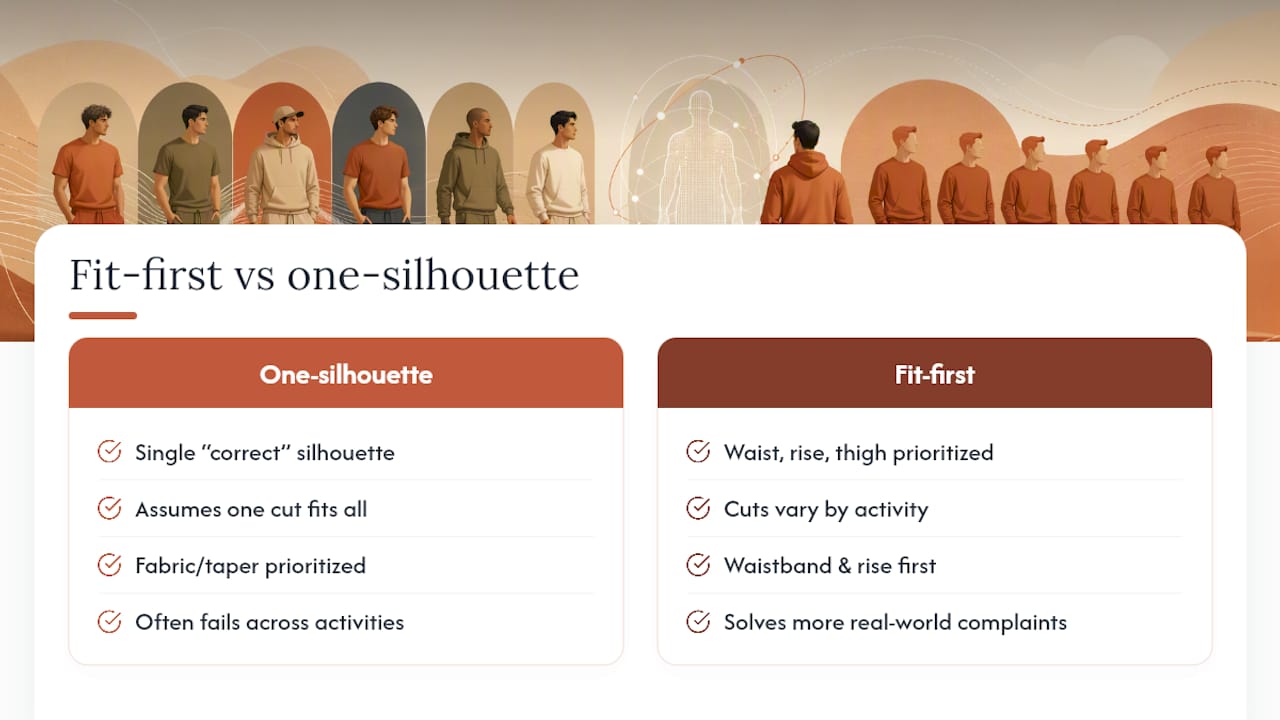
Most fit guides treat joggers like a single garment with one correct silhouette, and that’s exactly backward. Your waist, rise, and thigh needs shift depending on whether you’re deadlifting, traveling, or just running errands, and a pair that nails one of those uses often fails at another. The mistake I see shoppers make most often isn’t picking the wrong size number, it’s picking one cut and expecting it to solve every situation.
That’s the thinking behind how Couchanddumbells approaches jogger-style fitness apparel: build the waistband security and rise options first, then let fabric and taper adjust to the activity. A relaxed thigh with a secure waistband solves more real-world fit complaints than any single “true to size” claim ever could, because it acknowledges that bodies move differently depending on what they’re doing.
— Brian Dunn, Couch & Dumbbells
Which Couch & Dumbbells Joggers Match Your Fit Needs
Once you know your checkpoints, matching them to the right pair gets simple. If your priority is a tapered leg for gym-to-street wear with a secure waistband and gradual taper, Men’s Fitness Pants are built with exactly that fit profile in mind.

If you need a higher rise that stays comfortable through curvier hips without gapping at the back, the Hip fitness pants are designed around that exact rise and waistband need. And if you’re shopping for a women’s fit with strong stretch recovery for strength training, the CurveBoost Fitness Leggings demonstrate how elastane content and cut work together for both mobility and shape retention.
For lounging around the house between workouts, pair either style with pieces from the Fitness & Gear collection to round out a comfortable rotation. Ready to find your fit? Browse the Men’s Fitness Pants page now and check the size chart against your own waist and inseam numbers before you order.
Sources
- How Should Joggers Fit? A Complete Guide for Men and Women – G Gradual®
- How Should Joggers Fit? Waist, Rise and Cuff Guide
- Mens Sweatpant Fit Guide
- How to Choose Joggers Fit - Slim vs Relaxed, Inseam & Waistband Guide | JoggersReview
- The Men’s Joggers Fit & Size Guide: Tapered, Relaxed, Cuffed – 4-rth
FAQ
Should You Size Up or Down in Joggers?
Size up only if your true waist measurement still fits comfortably in that larger size, never just to gain extra thigh room. If you need more leg volume, choose a relaxed cut instead of a bigger size to keep the waist and rise secure.
What Size of Joggers Should You Get?
Measure your waist, hips, and inseam first, then match those numbers against the specific brand’s size chart rather than assuming your usual size carries over. Prioritize waist measurement for a tailored fit and hip measurement if you want a roomier silhouette.
How Should Joggers Fit?
Joggers should sit secure at the waist without digging in, stay relaxed through the thigh for full mobility, and taper gradually to a cuff that lands at or just above your shoe. Test the fit by sitting down and lifting your knee toward your chest before deciding.
Are Joggers Supposed to Be Tight or Loose?
Neither extreme works well: a proper fit sits snug at the waist for security, relaxed through the thigh for movement, and tapered rather than baggy at the ankle. Fabrics with higher elastane content let you size down for a slimmer look without losing mobility.